# Is the End Near for Big Food?
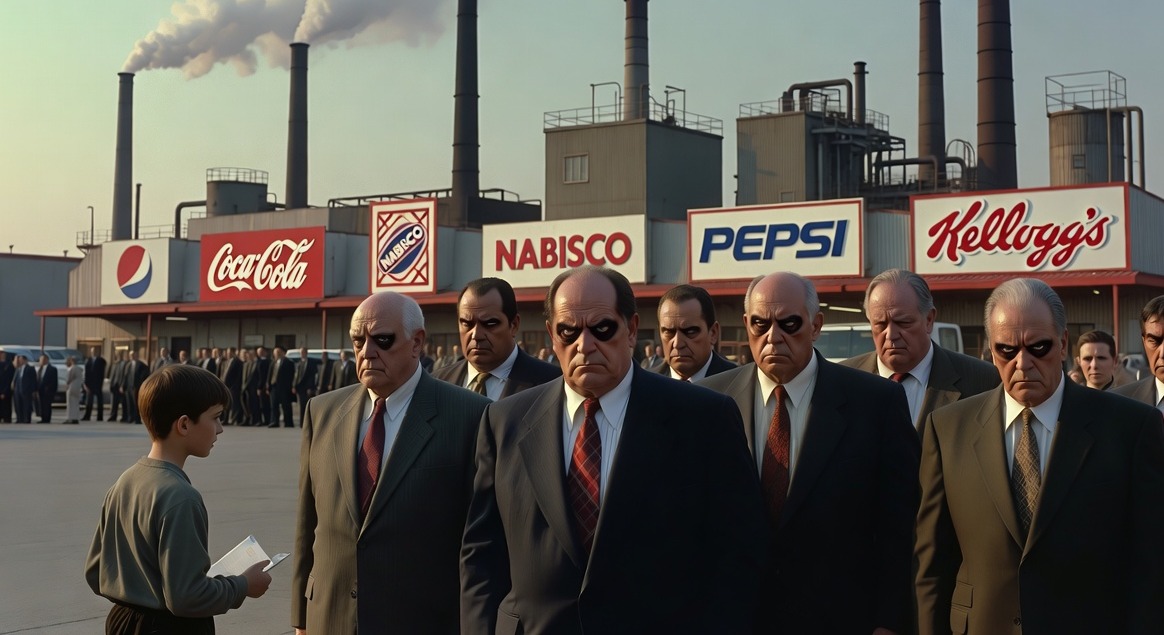
A landmark lawsuit has been filed against eleven of the world's largest processed food companies. The complaint alleges that these corporations intentionally engineered ultra-processed foods to be addictive, metabolically damaging, and deceptively marketed. All while shifting the blame for the resulting epidemics of obesity, diabetes, and chronic illness onto the public.
This moment is historic. Not because the allegations are surprising, but because they are finally being stated in legal language.
!Big Food faces a landmark lawsuit over ultra-processed foods
The Problem Has Been Visible for Decades
For decades, chronic metabolic diseases have surged. Type II diabetes. Obesity. Hypertension. Fatty liver disease. Autoimmune disorders. Children now suffer illnesses once seen only in middle age. Grocery aisles are filled with substances few consumers can pronounce, let alone reproduce in their kitchens.
And through all of it, one narrative has persisted: if you're sick, it's your fault.
This lawsuit does not introduce a new problem. It finally identifies the system responsible. Much of what appears in the complaint aligns, almost point for point, with arguments I've detailed in WildFit, The Gap book, and PostDiabetic. Not because of prediction, but because the biological and political realities have been visible and ignored for a very long time.
What the Lawsuit Alleges
The complaint, filed by the San Francisco City Attorney's Office, names Kraft Heinz, Mondelez, Coca-Cola, PepsiCo, General Mills, Nestle USA, Kellanova, WK Kellogg, Mars, Conagra, and Post Holdings. It asserts that these companies:
- Engineered foods for addiction, optimizing formulations to hijack dopamine pathways
- Manufactured edible substances with no natural equivalents and no transparency around their design
- Knowingly fueled metabolic disease, especially among children
- Manipulated scientific research, dietary guidelines, and public messaging to conceal risks
- Shifted responsibility onto consumers using a playbook pioneered by Big Tobacco
- Resisted transparency and regulation through lobbying and political influence
These are not the claims of activists. These are allegations in a formal legal complaint.
The Big Tobacco Playbook
One of the most important elements of this case is its assertion that consumers were not merely misled. They were pre-positioned to blame themselves.
Big Tobacco understood something powerful. If society could be convinced that lung cancer was the smoker's fault, not the cigarette's, then every future jury would walk into the courtroom already leaning toward the defense. You don't need to win the science if you've already shaped the beliefs of the people who will judge you.
This was jury tampering in advance. Not bribing jurors, but shaping their worldview long before they ever sat in a jury box.
Big Food replicated the tactic perfectly. Even the term "lifestyle disease" is an attempt to shift blame from a profit-motivated food industry onto the consumer. When people believe obesity, diabetes, or metabolic disorders are self-inflicted failures of discipline, corporations cannot be blamed, regulators feel no urgency, and governments see no need to intervene.
This lawsuit challenges that narrative directly. It argues that "lifestyle disease" has functioned as a decades-long liability shield, protecting companies from responsibility for harms they engineered, understood, and then blamed on the people they profited from.
This is the evolutionary mismatch I talk about constantly. Our biology did not evolve to handle what these companies have manufactured.
Addiction by Design
The lawsuit alleges that ultra-processed foods were intentionally engineered to be addictive. This is not surprising to anyone who has studied food psychology or human biology.
Our reward system isn't malfunctioning. It is being exploited. Food companies develop and promote addictive products loaded with sugar, fat, and additives designed to bypass natural hunger cues. They use sugar to make food addictive. They add more sugar to trigger increased appetite. And they commission research to hide the damage they are doing.
We are addicted to this stuff. And our bodies are not built to handle it in these quantities. I wrote about this extensively in WildFit, and it is central to the WILDFIT program. The science is not ambiguous.
Confusion as a Business Strategy
One of the lawsuit's most striking claims is that food companies intentionally sowed confusion about nutrition. They want us confused. When we are confused, we are much easier to manipulate.
Here is a perfect example from PostDiabetic. One major newspaper ran the headline: "One egg a day increases diabetes risk by 60%." The same paper later published: "One egg a day lowers risk of Type 2 diabetes." Both referenced studies distorted by food industry funding.
This is not science. It is confusion as a commodity. Strategically manufactured cognitive dissonance designed to keep you buying.
The Sugar Research Foundation sponsored research that distracted Americans away from the truth about sugar and pointed the finger at fat and cholesterol instead. That research, published in JAMA, shaped the scientific discussion for decades. It helped launch the low-fat era, which replaced natural fats with sugar-laden, addictive, metabolically destructive products.
Big Tobacco in the Pantry
In the 1980s and 1990s, tobacco companies began diversifying. Philip Morris acquired General Foods and later Kraft. R.J. Reynolds purchased Nabisco. The companies that mastered nicotine addiction bought the companies that mastered engineered flavors and hyper-palatable foods.
The result was predictable. Cigarette-style addiction science entered the food supply. The lawsuit effectively argues that it is time to treat this like the tobacco litigation, because the behavior is the same.
Overfed and Starving
People are simultaneously overfed and starving. Consuming too many empty calories and too few actual nutrients. The result is tremendous suffering and incredible strain on health & wellness systems worldwide.
This is how you build an epidemic. Feed people calories that trigger cravings but deny them the nutrients that satisfy. The lawsuit frames this as systemic harm. Biology frames it as inevitable harm.
COVID-19 exposed the fragility. Preexisting food-related diseases were among the most significant factors in pandemic mortality. A person with diabetes appeared to be up to 800% more likely to die. A chronically ill population is a fragile one, and this lawsuit places that fragility at the feet of the companies that designed the conditions for it.
Why This Matters
Regardless of how the courts rule, this case will shape food labeling laws, sugar regulation, marketing to children, school food policy, transparency requirements, and public health strategy for years to come.
For years, I've argued in WildFit, The Gap book, and PostDiabetic that our food environment is biologically incompatible with human health. That addiction is often engineered. That metabolic disease is not personal failure. And that "lifestyle disease" is a shield used by industry to protect profits.
This lawsuit brings those issues into the legal arena, where public health crises are often truly confronted.
This may not be the end of Big Food. But it may be the end of its ability to harm without accountability. And that would be a historic step toward reclaiming human health.
Frequently Asked Questions
The lawsuit, filed by the San Francisco City Attorney's Office, alleges that eleven major food companies intentionally engineered ultra-processed foods to be addictive and metabolically harmful, manipulated scientific research, and used Big Tobacco's playbook to shift blame onto consumers rather than accept responsibility for widespread chronic disease.
Big Tobacco pioneered the strategy of framing health consequences as personal lifestyle choices to shield itself from legal liability. Big Food adopted the same approach, promoting the term 'lifestyle disease' to make consumers blame themselves for conditions like obesity and diabetes, rather than questioning the engineered products causing them. Tobacco companies also directly acquired food companies in the 1980s and 1990s, bringing addiction science into the food supply.
According to the lawsuit and decades of research, yes. Food companies optimize formulations with sugar, fat, and additives specifically designed to hijack dopamine pathways and bypass natural hunger cues. The goal is to trigger cravings that override the body's natural satiation signals, driving overconsumption and repeat purchases.