# Scariosity: The Word That Changed How I Understand Fear
I was terrified of public speaking until my mid-thirties. And I don't mean a little uncomfortable. I mean full-body, stomach-dropping, life-altering terror.
It showed up everywhere. Job interviews. School presentations. Professional meetings. It sat on top of every opportunity like a weight I couldn't lift. And the worst part? I didn't even know how many doors it was quietly closing behind my back. I only saw that clearly after I finally got past it.
Now, fear of public speaking is incredibly common. You've probably heard the old joke that people fear it more than death. But what most people never get is a framework for understanding what that fear actually is, and what it's trying to tell you.
I got mine from a word that doesn't exist.
A Word That Shouldn't Exist (But Should)
My wife Kersti is Estonian. English is her third or fourth language, and she's brilliant at it, but every now and then she'll invent a word without realizing it. One day we were talking about something like ziplining, and she said, very casually, "Oh, I had scariosity about that."
I laughed. She repeated it louder, the way you do when someone clearly didn't hear you. I had to stop her. "I don't know every word in the English language, but I'm pretty sure that one doesn't exist."
Then she asked the question that changed everything: "Well, what do you think it means?"
And it clicked instantly. Scariosity. Scary curiosity.
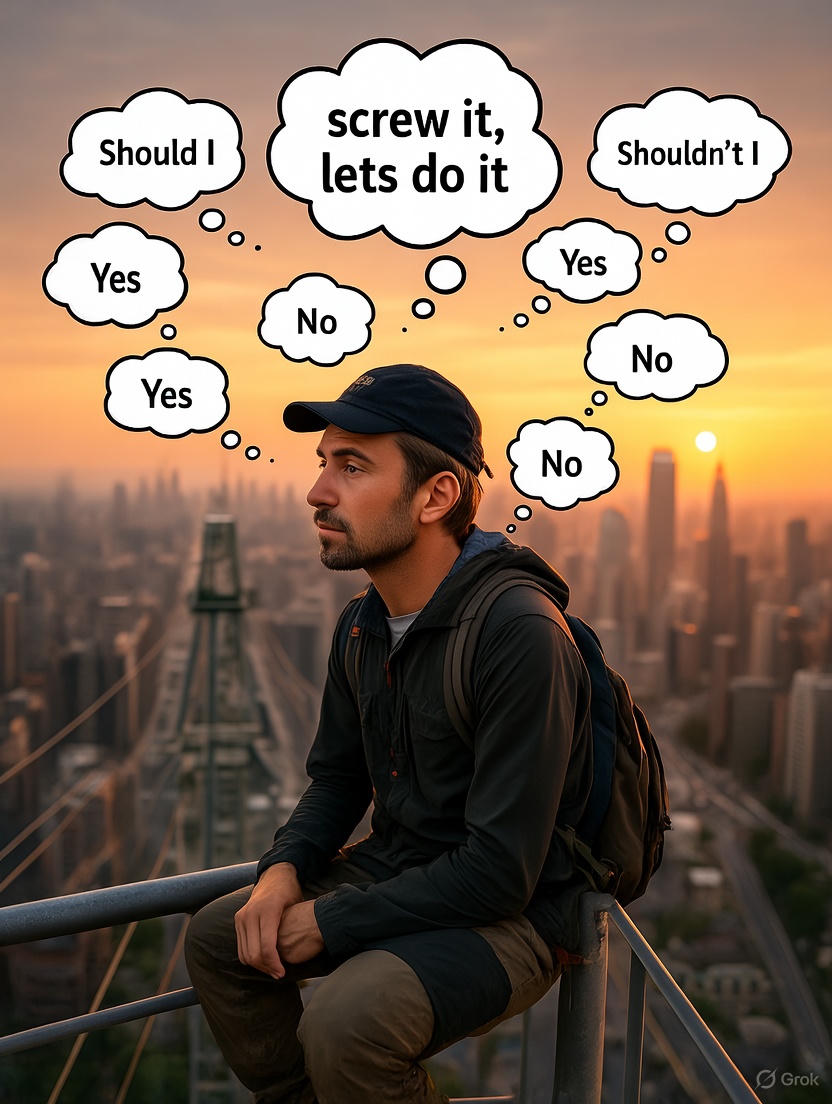
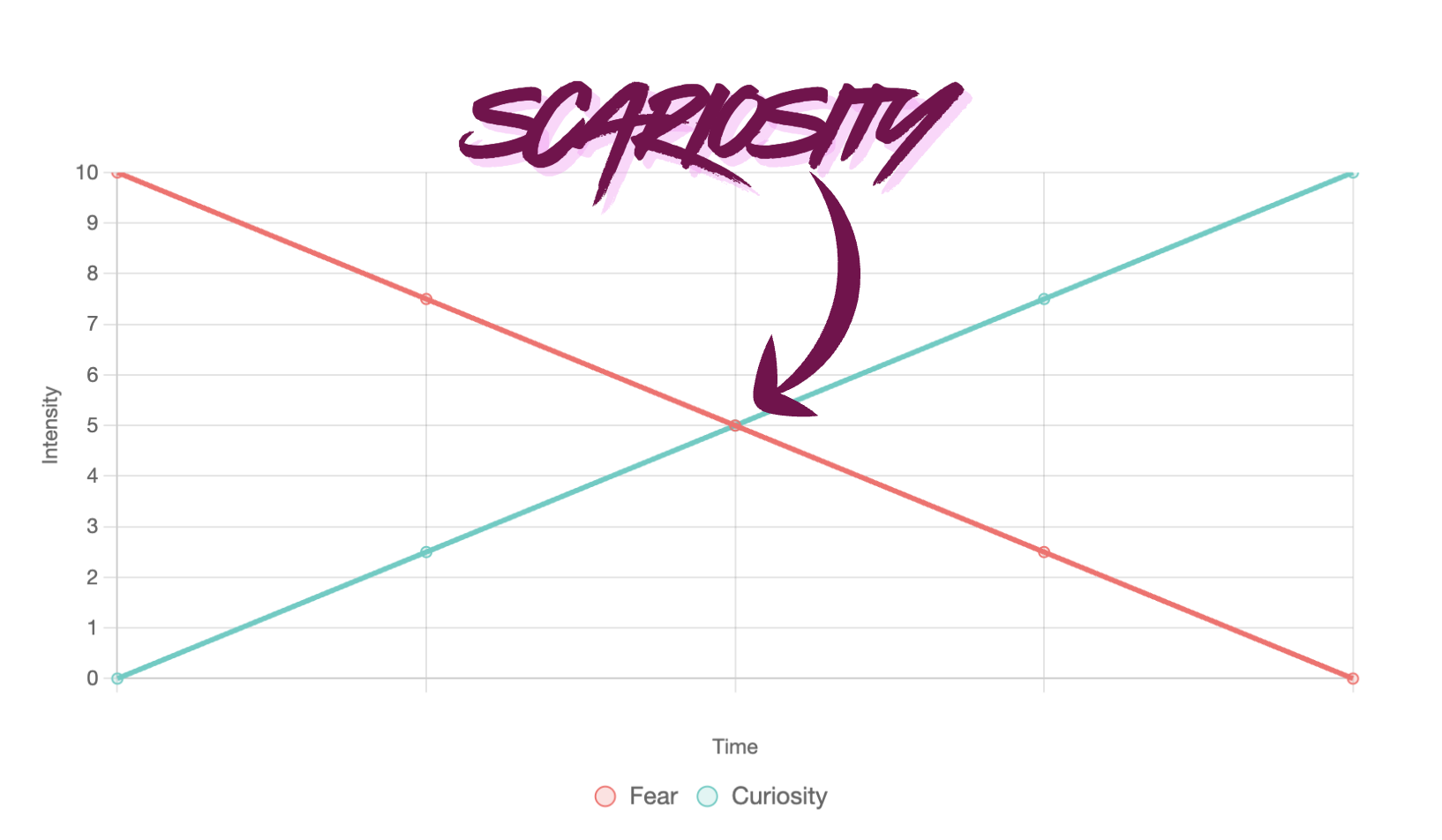
It's that exact moment when fear and curiosity collide. When part of you wants to run and part of you wants to lean in. And what determines your next move is which one you feed. If fear outweighs curiosity, you freeze. The second curiosity tips past fear, you move.
That word didn't just describe ziplining. It described the turning point of my entire speaking career.
My Long History With Stage Fright
I had plenty of practice being afraid. There was the time I had to debate in front of my entire school assembly. I actually did well, but the terror nearly consumed me. There was the time my father asked me to present him with one of his AA birthday cakes, which meant giving a short speech in front of 200 people. I nearly left the room.
Later, I accepted a job promotion without realizing it required weekly presentations. For a year and a half, I lived in adrenaline and dread every single week.
So by my thirties, I had a long list of what I called "public speaking fiascos" and a deeply wired fear of stages and cameras.
But I also had something else. Over fifteen years of research into nutrition, metabolic health, and food psychology, I'd uncovered insights about how the food industry was manipulating human behavior. That work eventually became WildFit. I knew this information mattered. I knew it could help people. And the tension between wanting to share it and being terrified to stand up and do so was eating me alive.
The Night Everything Changed
A good friend of mine in Scotland, Mike, asked if I'd speak at his personal development club. The catch? It was six months away. That gap mattered more than I realized at the time. Because the event was so far in the future, I could focus on my curiosity and passion instead of my fear. I thought about the excitement of sharing my discoveries. I thought about helping people.
Somehow, I said yes. Massively out of character.
And here's what's fascinating: as the date grew closer, the fear never showed up. What showed up instead was excitement.
That's when I noticed something that rewired my understanding of fear forever. Nervousness and excitement are the same physical state. Sweaty palms. Racing heartbeat. Shortness of breath. Stomach flipping. Whether you label it "nervous" or "excited," the body is doing the identical thing. The only difference is the expected outcome. If you expect pain, embarrassment, or failure, you call it nervousness. If you expect joy, reward, or connection, you call it excitement.
That's the heart of scariosity. When you focus on the fear side, you freeze. When you focus on the curiosity side, you move.
By the time I got to Scotland, I was certain the nerves would finally hit. I figured they'd slam into me during intermission, right before I went on. Instead, something extraordinary happened. I listened to the first speaker with total presence. No gnawing stomach. No tunnel vision. No dread. Intermission came. Still nothing but excitement.
When I walked on stage, I delivered an hour and a half of ideas, stories, and laughter. People came up to me afterward saying I'd changed their perspective, that they were going to take action. That night changed my life. It was the night I learned how to navigate scariosity, and it set me on the path that eventually led to SpeakerNation.
What Your Fear Is Actually Telling You
Here's something most people miss. If you're nervous about public speaking, there are really only two reasons. Either someone is forcing you to do it, or you actually want to do it, even if you haven't fully admitted that to yourself yet.
Think about it. Someone who has zero interest in speaking and isn't being forced into it rarely feels fear about it. They're just not thinking about it. So if you feel that knot in your stomach when you imagine standing in front of a room, that's not a warning. That's scariosity. And the stronger the nerves, the bigger the breakthrough waiting on the other side.
The Scariosity Spectrum
Picture a spectrum. On one end you've got apprehension, fear, awareness of danger, nervousness. On the other end you've got curiosity, intrigue, positive expectation, a sense of fun and excitement.
You get to choose where you place your attention. If you fixate on the fear, you won't act. If you place your focus on the curiosity, the passion, the potential benefit, you will act. And the fear will fade.
This isn't positive thinking. It's not pretending you're not scared. It's recognizing that the emotion you're feeling has two names, and you get to pick which one you answer to.
How to Use This
Every time you feel that blend of nerves and curiosity, pause. Remind yourself: same emotion, same physical signs, different expectation. Then choose to call it excitement. Choose to act.
Scariosity isn't something to run from. It's a signal. It means something on the other side of that fear matters to you. And the moment you recognize that, you're already moving.
I talk about this concept in depth on my podcast, and it's one of the core ideas I teach at SpeakerNation. Because once you understand scariosity, fear stops being a wall. It becomes a door.


Frequently Asked Questions
Scariosity is a blend of 'scary' and 'curiosity.' It describes the moment when fear and curiosity collide, and your next action depends on which feeling you give more attention to. When curiosity outweighs fear, you move forward. When fear dominates, you freeze.
Physiologically, yes. Sweaty palms, racing heart, shortness of breath, and stomach butterflies are identical whether you label the feeling nervousness or excitement. The only difference is your expected outcome. Expecting pain produces nervousness. Expecting reward produces excitement.
When you feel nervous about speaking, that feeling is actually scariosity, a signal that something on the other side of the fear matters to you. By shifting your focus from the fear side to the curiosity and passion side, you can reframe the emotion as excitement and take action instead of freezing.